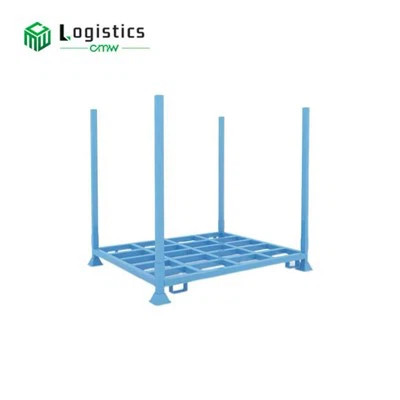

What is the Load - Bearing Capacity of a Laundry Cage?
As a laundry cage supplier, I often get asked about the load - bearing capacity of our products. Understanding this is crucial for customers, whether they are running a small - scale laundry service or a large commercial laundry facility. In this blog post, I'll delve into the factors that determine the load - bearing capacity of a laundry cage and why it matters.
Factors Affecting Load - Bearing Capacity
Material Quality
The material used to construct the laundry cage is one of the most significant factors influencing its load - bearing capacity. Most of our laundry cages, such as the Laundry Roll Cage, are made from high - quality steel. Steel is known for its strength and durability. High - grade steel can withstand heavy weights without deforming or breaking. For example, a cage made from low - quality steel might start to show signs of bending when loaded with 500 kilograms, while a cage made from premium - grade steel could handle up to 1500 kilograms.
The thickness of the steel also plays a vital role. Thicker steel bars can distribute the weight more evenly across the structure of the cage. A cage with 3 - millimeter thick steel bars will generally have a higher load - bearing capacity than one with 2 - millimeter thick bars.
Design and Structure
The design of the laundry cage is another critical factor. Cages with a well - thought - out structure can better handle heavy loads. Our 4 Sided Laundry Roll Cage is designed with four solid sides, which provides additional support. This design helps to prevent the cage from collapsing under the weight of the laundry.
The shape of the cage also matters. A rectangular cage with reinforced corners is more stable than a cage with a flimsy or irregular shape. The internal framework of the cage, including the cross - bars and supports, is engineered to distribute the weight evenly. If the framework is poorly designed, the weight might concentrate in one area, leading to premature failure of the cage.
Wheels and Casters
The wheels and casters on a laundry cage are often overlooked but are essential for its load - bearing capacity. High - quality wheels can support a greater weight and move smoothly even when the cage is fully loaded. Our laundry cages are equipped with heavy - duty wheels that are rated for a specific weight capacity. For instance, if a set of wheels is rated for 1000 kilograms, the overall load - bearing capacity of the cage is also limited by this rating.
If the wheels are not up to the task, they can become damaged or break under the weight, which can cause the cage to tip over and potentially damage the laundry or injure workers.
Importance of Knowing the Load - Bearing Capacity
Safety
Safety is the primary reason why knowing the load - bearing capacity of a laundry cage is crucial. Overloading a cage can lead to structural failure, which can cause the cage to collapse. This not only damages the laundry but also poses a significant risk to the safety of the workers handling the cage. By adhering to the recommended load - bearing capacity, you can ensure a safe working environment.
Efficiency
Using a laundry cage within its load - bearing capacity also improves efficiency. A cage that is overloaded is difficult to move, and the wheels may wear out more quickly. This can slow down the laundry process and increase maintenance costs. On the other hand, using a cage with the appropriate load - bearing capacity allows for smooth movement and efficient handling of the laundry.
Cost - Effectiveness
In the long run, understanding the load - bearing capacity of a laundry cage is cost - effective. Buying a cage with a higher load - bearing capacity than you need might be more expensive upfront. However, if you consistently overload a cage with a lower capacity, you will likely have to replace it more frequently due to damage. By choosing the right cage for your needs, you can optimize your investment.
Determining the Right Load - Bearing Capacity for Your Needs
When selecting a laundry cage, it's important to consider your specific requirements. First, estimate the maximum weight of the laundry you will be transporting at one time. This includes the weight of the wet laundry, as well as any additional items such as detergents or cleaning supplies that might be stored in the cage.
If you have a large - scale laundry operation, you may need a cage with a higher load - bearing capacity. For smaller operations, a cage with a lower capacity might be sufficient. It's also a good idea to leave some margin for error. For example, if your estimated maximum load is 800 kilograms, it might be wise to choose a cage with a load - bearing capacity of 1000 kilograms.
Our Range of Laundry Cages and Their Load - Bearing Capacities
At our company, we offer a wide range of laundry cages with different load - bearing capacities. Our standard Laundry Roll Cage has a load - bearing capacity of up to 1000 kilograms. This is suitable for most medium - sized laundry operations.
For larger facilities, our 4 Sided Laundry Roll Cage can handle loads of up to 1500 kilograms. These cages are built with extra - strong steel and a reinforced structure to ensure they can withstand heavy use.
Conclusion
The load - bearing capacity of a laundry cage is determined by several factors, including material quality, design, and the quality of the wheels and casters. Knowing the load - bearing capacity is essential for safety, efficiency, and cost - effectiveness. At our company, we are committed to providing high - quality laundry cages with clear load - bearing capacity specifications.


If you are in the market for a laundry cage and need help determining the right load - bearing capacity for your needs, we are here to assist you. Feel free to reach out to us to discuss your requirements and start a procurement conversation. We look forward to working with you to find the perfect laundry cage solution for your business.
References
- "Materials Science and Engineering: An Introduction" by William D. Callister Jr. and David G. Rethwisch.
- Industry standards for laundry equipment and storage containers.