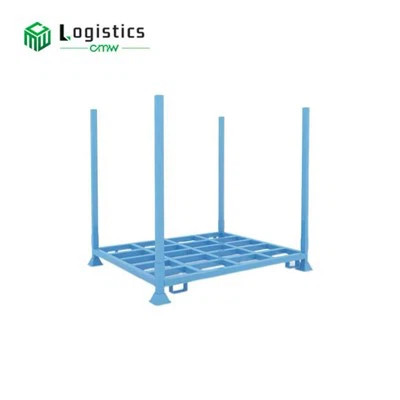

Are stillage cages recyclable? Well, as a stillage cage supplier, I get this question a lot. And the answer is a resounding yes! Stillage cages are not only highly useful in various industries but are also environmentally friendly when it comes to their end - of - life cycle.


Let's start by understanding what stillage cages are. These are sturdy metal structures used for storing, transporting, and organizing goods. They come in different shapes and sizes, like the Cage Pallet With Half Gate, which is great for easy access to the stored items, the Collapsible Pallet Stillage Cage that can be folded up when not in use to save space, and the Metal Storage Cage that offers high - capacity storage.
The main material used in making stillage cages is metal, usually steel or iron. Metals are some of the most recyclable materials on the planet. When a stillage cage reaches the end of its useful life, it can be broken down and recycled into new metal products. Recycling metal stillage cages has a ton of benefits.
First off, it's a huge win for the environment. Mining and refining new metals from ore is an energy - intensive process. It requires a large amount of fossil fuels, which contribute to greenhouse gas emissions and climate change. By recycling stillage cages, we reduce the demand for new metal production. This means less energy consumption and fewer pollutants released into the atmosphere. For example, recycling steel can save up to 75% of the energy needed to produce new steel from iron ore.
Secondly, recycling is cost - effective. The cost of recycling metal is generally lower than the cost of producing new metal from scratch. For businesses, this can translate into savings, especially if they are involved in large - scale manufacturing or logistics where a significant number of stillage cages are used. When companies can recycle their old stillage cages and get a portion of their value back, it's a financial incentive to go green.
Another important aspect is the conservation of natural resources. The Earth's supply of metal ores is finite. By recycling stillage cages, we can stretch these resources further. This is crucial for the long - term sustainability of industries that rely on metals. Instead of depleting the planet's resources at an alarming rate, we can create a circular economy where materials are reused over and over again.
Now, let's talk about the recycling process of stillage cages. The first step is collection. Once a stillage cage is no longer needed, it can be collected by a recycling facility. These facilities are equipped with the necessary tools and equipment to handle large metal structures.
After collection, the cages are sorted based on the type of metal they are made of. Different metals have different properties and recycling requirements. For example, steel and iron need to be separated because they have different melting points.
Next, the cages are shredded into smaller pieces. Shredding increases the surface area of the metal, making it easier to melt down. The shredded metal is then melted in a furnace at extremely high temperatures. The impurities are removed during the melting process, and the pure metal is then cast into new shapes.
The new metal can be used to make all sorts of products, including new stillage cages. This closes the loop in the recycling process. Companies can take advantage of this by purchasing recycled - based stillage cages, which are just as durable and functional as those made from new metal.
As a stillage cage supplier, I've seen firsthand the positive impact of recycling. Many of our customers are becoming more environmentally conscious and are actively seeking ways to reduce their carbon footprint. By offering recyclable stillage cages, we are not only meeting their needs but also contributing to a more sustainable future.
If you're in the market for stillage cages, whether it's the Cage Pallet With Half Gate, the Collapsible Pallet Stillage Cage, or the Metal Storage Cage, you can rest assured that you're making an environmentally friendly choice. And when these cages reach the end of their life, you can easily recycle them.
If you're interested in purchasing stillage cages or have any questions about their recyclability, don't hesitate to reach out. We're here to help you make the best decision for your business and the environment. Let's work together to create a more sustainable world through smart material choices.
References
- "Recycling Metals: An Introduction" by the Institute of Scrap Recycling Industries
- "The Environmental Impact of Metal Production" from the World Steel Association
- "Benefits of Recycling in the Manufacturing Sector" published by the Environmental Protection Agency