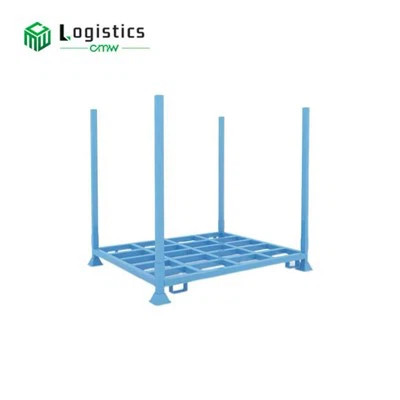

Determining the size of a gas cylinder cage is a crucial aspect when it comes to the safe storage and handling of gas cylinders. As a gas cylinder cages supplier, we understand the importance of getting this right to ensure both compliance with safety regulations and the efficient use of space.


Understanding Gas Cylinder Dimensions
Before delving into how to size a gas cylinder cage, it's essential to have a clear understanding of gas cylinder dimensions. Gas cylinders come in various shapes and sizes, depending on their intended use and the type of gas they contain. Common dimensions to consider include the cylinder's diameter, height, and sometimes the overall footprint when considering multiple cylinders.
Cylinder diameter can range significantly. For example, small compressed gas cylinders used in laboratories might have a diameter of just a few inches, while large industrial cylinders can have diameters of over a foot. The height of a cylinder is equally variable, with some small portable cylinders being less than a foot tall, and industrial ones reaching heights of several feet.
Factors to Consider in Cage Sizing
When determining the size of a gas cylinder cage, several factors must be taken into account:
Number of Cylinders
One of the primary factors is the number of gas cylinders that need to be stored in the cage. If you're dealing with a single cylinder, the cage size will be much smaller compared to a situation where you need to store multiple cylinders. For instance, if you're storing five large industrial cylinders, you'll need a cage that can accommodate the combined footprint and height of these cylinders, plus some additional space for ease of access.
Safety Clearance
Safety clearance is a must - have requirement. Regulatory bodies often mandate a certain amount of space around gas cylinders to reduce the risk of fire, explosion, or damage in case of an incident. A minimum clearance around each cylinder should be maintained to prevent cylinders from knocking into each other and to allow for proper ventilation. For example, a common safety clearance around a cylinder might be at least 6 inches on all sides.
Cylinder Arrangement
The way the cylinders are arranged in the cage also affects the cage size. Cylinders can be arranged in rows, stacks, or a combination of both. Arranging cylinders in rows might require a wider cage, while stacking them might need a taller cage. Consideration should also be given to the ease of loading and unloading the cylinders. If the cylinders are to be loaded using a forklift, there should be enough space in the cage for the forklift to maneuver safely.
Calculating the Cage Size
Let's take a step - by - step approach to calculate the size of a gas cylinder cage based on cylinder dimensions:
Step 1: Measure the Cylinder Dimensions
First, accurately measure the diameter and height of each type of gas cylinder that will be stored in the cage. If you have different sizes of cylinders, make a list of the dimensions for each size.
Step 2: Determine the Number of Cylinders and Arrangement
Decide how many cylinders of each size will be stored and how they will be arranged. For example, if you have ten cylinders of the same size and plan to arrange them in two rows of five, note this down.
Step 3: Calculate the Footprint
To calculate the footprint of the cylinders, consider the diameter of the cylinders and the spacing between them. If the diameter of a cylinder is (d) and the safety clearance on each side is (s), the effective width occupied by one cylinder is (d + 2s). If you have (n) cylinders arranged in a row, the total width of the row is (n\times(d + 2s)). If you have multiple rows, the overall length of the cage in the direction of the rows will be determined by the number of rows and the length of each cylinder (including clearance).
For example, if the diameter of a cylinder (d = 10) inches and the safety clearance (s= 6) inches, the effective width of one cylinder is (10 + 2\times6=22) inches. If you have five cylinders in a row, the width of the row is (5\times22 = 110) inches.
Step 4: Consider the Height
The height of the cage should be tall enough to accommodate the tallest cylinder, plus some additional space for safety and handling. A common additional height allowance could be around 6 - 12 inches. So, if the tallest cylinder is 5 feet tall, the cage height should be at least 5 feet 6 inches.
Custom - Designed Cages
In many cases, a standard - sized cage may not fit the specific requirements of your gas cylinder storage. That's where our custom - designed gas cylinder cages come in. As a gas cylinder cages supplier, we have the expertise to design and manufacture cages that are tailored to your exact cylinder dimensions and storage needs.
Our team of experts will work closely with you to understand your requirements, including the number and size of cylinders, the storage location, and any specific safety regulations that need to be met. We can then design a cage that maximizes space utilization while ensuring the highest level of safety.
Examples of Our Products
We offer a wide range of gas cylinder cages to suit different needs. One of our popular products is the Gas Cylinder Forklift Storage Pallet. This product is specifically designed for easy handling with a forklift and is well - suited for industrial environments where cylinders need to be moved frequently.
Another great option is our Gas Bottle Cylinder Cages. These cages are available in various sizes and can accommodate different numbers of gas bottles. They are designed with safety in mind, featuring strong frames and sturdy locking mechanisms.
Benefits of Choosing Our Gas Cylinder Cages
- Safety: Our cages are designed and built to meet or exceed all relevant safety standards. They provide a secure and stable storage environment for gas cylinders, reducing the risk of accidents.
- Quality: We use high - quality materials in the manufacturing of our cages to ensure durability and long - term performance.
- Customization: As mentioned earlier, we can customize our cages to fit your specific needs, whether it's a unique cylinder size or a specific storage layout.
- Expert Support: Our team of experts is always available to provide advice and guidance on cage sizing, installation, and maintenance.
Contact Us for Your Gas Cylinder Cage Needs
If you're in the market for gas cylinder cages, we invite you to contact us for a consultation. Whether you're a small business with a few cylinders or a large industrial facility with a high volume of gas cylinder storage requirements, we have the solutions to meet your needs.
We can help you determine the right size of gas cylinder cage for your cylinders, and provide you with a quote that fits your budget. Don't compromise on safety and efficiency when it comes to gas cylinder storage. Let us be your trusted partner in this important aspect of your operations.
References
- AS 4332 - 2004, The storage and handling of gases in cylinders.
- OSHA regulations on the storage of compressed gases in cylinders.
- NFPA 55: Compressed Gases and Cryogenic Fluids Code.