

In the global commercial laundry sector, Laundry Cage has long gone beyond being merely a fabric transportation tool. Instead, it has become a solution for various industries to address fabric-related challenges, ranging from guesthouses and hotels, industrial laundry plants to nursing homes. This article will systematically analyze the technical features and engineering value of Laundry Cage in different application fields.
I. Hotel and Guesthouse Industry: Balancing efficient turnover and brand image
The hotel needs to handle a huge amount of linen every day. Different types of fabrics have different circulation paths and processing requirements. At this time, the Laundry Cage assumes different roles.
1. Collection and Classification
In hotel guest rooms, the floor space is usually limited. Therefore, the Laundry Cage needs to strike a delicate balance between compact size and large capacity. This is due to its foldable and nestable design, which can be unfolded during the day and folded for storage at night, further releasing the space in the corridor.
2. Fabric Protection
In hotels, linen is often an important asset, and its lifespan directly affects the operating costs. The rounded corner design and smooth surface treatment of the Laundry Cage will avoid sharp edges from snagging the fabric. Additionally, the grid size has also been optimized to prevent small towels or pillowcases from falling.
3. Efficient Connection with Laundry Factories
For some hotels that operate their own laundry rooms, the Laundry Cage needs to collaborate with the laundry equipment to make laundry-filled Laundry Cages directly pushed to the equipment, making loading and unloading more effortless.
For hotels that need outsourcing laundry services, the Laundry Cage also needs to consider the loading efficiency of the transportation vehicles. The foldable design can reduce the occupied space by more than 60% when empty and returning, significantly reducing logistics costs.
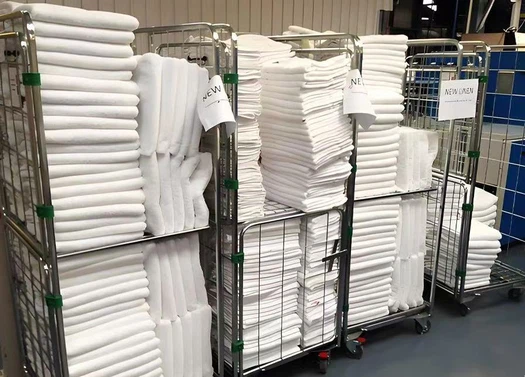
II. Industrial Laundry Factory: Continuous Production Logistics Node
The core operation of an industrial laundry factory is continuous and standardized production processes. The Laundry Cage plays the role of a transitional and turnover unit.
1. Process Flow Tools
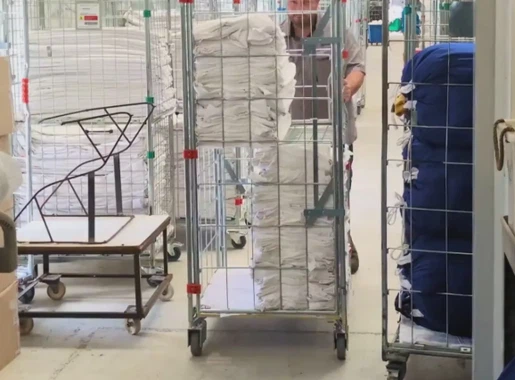
In industrial laundry factories, linen goes through many processes from receiving to folding and packaging. The Laundry Cage can run through the entire laundry process and does not need to frequently switch containers, improving efficiency while reducing fabric wear.
In the washing area, a high-temperature-resistant Laundry Cage should be used, which can enter the laundry area together with the fabric; in the drying area, a laundry cage with a good grid structure is required to ensure proper air circulation; in the clean area, a Laundry Cage with a lid is needed to prevent secondary contamination of the linen.
2. Large Capacity and Heavy Load Design
In industrial laundry scenarios, the load-bearing capacity of the Laundry Cage is extremely high. High-strength steel welding is required, with a load capacity of 400-600 kilograms. The foot wheels should be 125mm in diameter to enable the Laundry Cage to be easily pushed in a full-load state. The bottom of the Laundry Cage is also designed with four-way forklift ports for overall transportation in the loading and unloading area.
III. Relying on Health Institutions: Balancing Aging Adaptability and Hygiene Safety
For institutions such as nursing homes and rehabilitation centers, there are unique requirements for the Laundry Cage. While ensuring hygiene and safety, it must also adapt to the characteristics of the elderly or those with limited mobility.
1. Lightweight Design
The staff in nursing institutions are often female or older employees, so the self-weight of the Laundry Cage needs to be within a reasonable range. It should use both high-strength and lightweight materials to ensure the load-bearing capacity while reducing the weight when empty, making daily movement more time-saving and labor-saving.
2. Stability and Safety
The channels in nursing institutions may have ramps or thresholds, so the stability of the Laundry Cage is very high. The wide wheel spacing and low center of gravity design ensure that the Laundry Cage has anti-overturning ability on inclined ground; all foot wheels are designed with one-stop brakes to lock the wheels or turn when parking.
3. Hygiene Management
Senior care institutions have very strict requirements for hygiene, especially for the contaminated linen generated in the care areas. The Laundry Cage can be equipped with antibacterial coatings to inhibit the growth of bacteria on metal surfaces; the overall seamless design ensures thorough cleaning and disinfection.
IV. Food and Catering Industry: Addressing Special Hygiene Requirements
For scenarios such as food and catering industries, the linen generated often comes into contact with oils, food residues, etc., so there are special requirements for the Laundry Cage.
1. Corrosion Resistance
Kitchens are usually in high-temperature and high-humidity environments. During washing, strong oil-removing products are often needed, which have a strong corrosive effect on metals. After undergoing heat galvanizing and other treatments, the Laundry Cage can withstand these conditions and is not prone to rust even after long-term use.
2. Easy Cleaning
Products and equipment in the catering industry have passed food safety certifications. All equipment must be easy to clean. The grid design of the Laundry Cage can easily clean every corner and will not leave food residues or dirt.
3. Classification Management
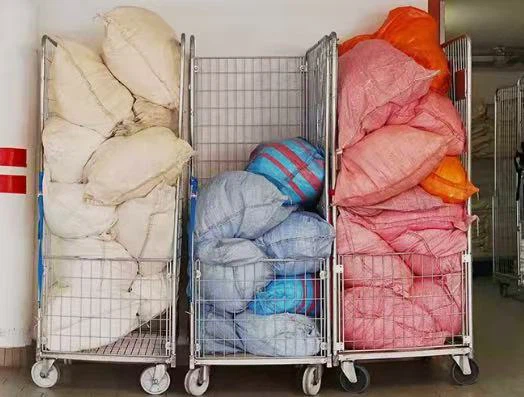
One important aspect of catering hygiene is to prevent cross-infection. Different types of linen for different uses need to be distinguished using different colored Laundry Cages for classification management from the source of linen collection.

The diversified applications of Laundry Cage demonstrate that it is being demanded by various industries. For professional buyers, understanding the application of Laundry Cage in different scenarios means being able to truly address the unique challenges faced by the industry.
If you have specific industry application requirements or technical inquiries, please feel free to contact our team at any time!


