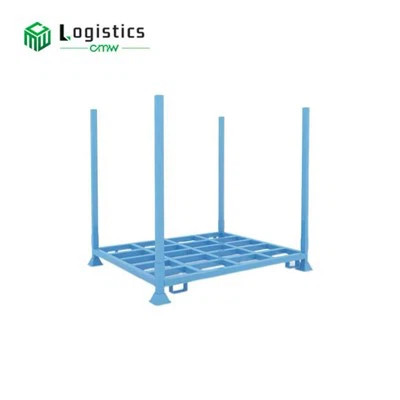

When it comes to shipping goods, one of the crucial aspects that often gets overlooked is determining the appropriate number of post pallets needed for a shipment. As a post pallet supplier, I understand the significance of this calculation in ensuring efficient and cost - effective transportation. In this blog, I'll guide you through the process of calculating the number of post pallets required for your shipment, considering various factors.
Understanding Post Pallets
Before we delve into the calculation, let's briefly understand what post pallets are. Post pallets are specialized pallets designed to provide stability and support for stacked goods. They come in different types, such as Steel Post Pallet, Metal Post Pallets, and Extended Metal Post Pallet. These pallets are commonly used in industries where goods need to be stacked vertically to save space during storage and transportation.
Factors Affecting the Number of Post Pallets
- Size and Dimensions of the Goods
The first and most obvious factor is the size of the goods you are shipping. Measure the length, width, and height of each item. If the goods are irregularly shaped, try to find the smallest rectangular prism that can enclose the item for measurement purposes. Larger items will require more space on the pallet, which may reduce the number of items that can be placed on a single pallet. - Weight Capacity of the Pallets
Each type of post pallet has a specific weight capacity. It's essential to know the weight of your goods and the maximum weight that the post pallets can handle. Overloading a pallet can lead to damage during transportation, which may result in damaged goods and safety hazards. Check the specifications of the Steel Post Pallet or other types of pallets you are considering to ensure they can support the weight of your shipment. - Stacking Height and Stability
The height to which you can stack the goods on the pallets is another important consideration. This is determined by the stability of the pallets and the nature of the goods. Some goods may be more prone to toppling over if stacked too high. Additionally, transportation regulations may limit the maximum stacking height for safety reasons. You need to balance the desire to stack as many goods as possible with the need for stability during transit. - Shipping Method and Space Constraints
The shipping method you choose, whether it's by truck, train, ship, or airplane, will also impact the number of pallets needed. Different shipping methods have different space constraints. For example, a shipping container has a fixed internal volume, and you need to ensure that the pallets can fit within this space efficiently. Consider the layout of the shipping vehicle or container and how the pallets will be arranged to make the most of the available space.
Calculation Steps
Step 1: Determine the Pallet Size
First, select the appropriate post pallet size for your shipment. The most common pallet sizes are standardized, but you may also have custom - sized pallets depending on your specific needs. Measure the length and width of the pallet. For example, a standard pallet size might be 48 inches by 40 inches.
Step 2: Calculate the Area Occupied by a Single Item
Based on the measurements of your goods, calculate the area that each item will occupy on the pallet. If the item is rectangular, simply multiply its length by its width. If it's irregular, estimate the area it will cover.
Step 3: Determine the Number of Items per Pallet
Divide the area of the pallet by the area occupied by a single item. However, this is a theoretical calculation, and you need to consider the actual arrangement of the items on the pallet. You may not be able to use the entire pallet area due to the shape of the items or the need for some space between them for stability. For example, if you have square - shaped items and a square pallet, you can arrange them in a grid pattern, but you may need to leave a small gap between each item.
Step 4: Consider the Stacking Height
Determine how many layers of items you can stack on each pallet based on the weight capacity of the pallet and the stability requirements. Multiply the number of items per layer (calculated in step 3) by the number of layers to get the total number of items that can be placed on a single pallet.
Step 5: Calculate the Total Number of Pallets
Divide the total number of items in your shipment by the number of items that can be placed on a single pallet. If the result is not a whole number, you will need to round up to the next whole number because you can't have a fraction of a pallet.
Example Calculation
Let's assume you are shipping rectangular boxes with the following dimensions: length = 12 inches, width = 10 inches, and height = 8 inches. The weight of each box is 20 pounds. You are using Metal Post Pallets with a size of 48 inches by 40 inches and a weight capacity of 2000 pounds.
- Area of a single box: (12\times10 = 120) square inches
- Area of the pallet: (48\times40=1920) square inches
- Number of boxes per layer (theoretical): (\frac{1920}{120}=16) boxes. But in reality, you may need to leave some space between the boxes, so let's assume you can fit 12 boxes per layer.
- Stacking height: The weight capacity of the pallet is 2000 pounds, and each box weighs 20 pounds. So, the maximum number of boxes based on weight is (\frac{2000}{20}=100) boxes. If we assume a stable stacking height allows for 5 layers, then the number of boxes per pallet is (12\times5 = 60) boxes.
- Total number of pallets: If you have 300 boxes in your shipment, then the number of pallets needed is (\frac{300}{60}=5) pallets.
Additional Considerations
- Damage and Spare Pallets
It's always a good idea to have some spare pallets in case of damage during transportation. You can estimate the potential damage rate based on past shipping experiences or industry standards. Add a certain percentage (e.g., 5 - 10%) of spare pallets to your calculated number. - Pallet Configuration and Compatibility
Make sure that the pallets you choose are compatible with your shipping equipment, such as forklifts and pallet jacks. Different pallets may have different configurations, and using incompatible equipment can lead to inefficiencies and potential damage to the pallets and goods.
Conclusion
Calculating the number of post pallets needed for a shipment is a complex but essential task. By considering the size and weight of your goods, the stacking height, and the shipping method, you can ensure that you use the right number of pallets for your shipment. As a post pallet supplier, I'm here to help you make the best choices for your shipping needs. Whether you need Steel Post Pallet, Metal Post Pallets, or Extended Metal Post Pallet, I can provide you with high - quality products and expert advice.


If you're interested in purchasing post pallets for your next shipment, I encourage you to get in touch with me for a detailed discussion. I'll work with you to understand your specific requirements and provide you with the most suitable solutions.
References
- "Pallet Design and Usage Guide" - Industry Standard Publication
- "Shipping and Logistics Best Practices" - Professional Logistics Handbook